
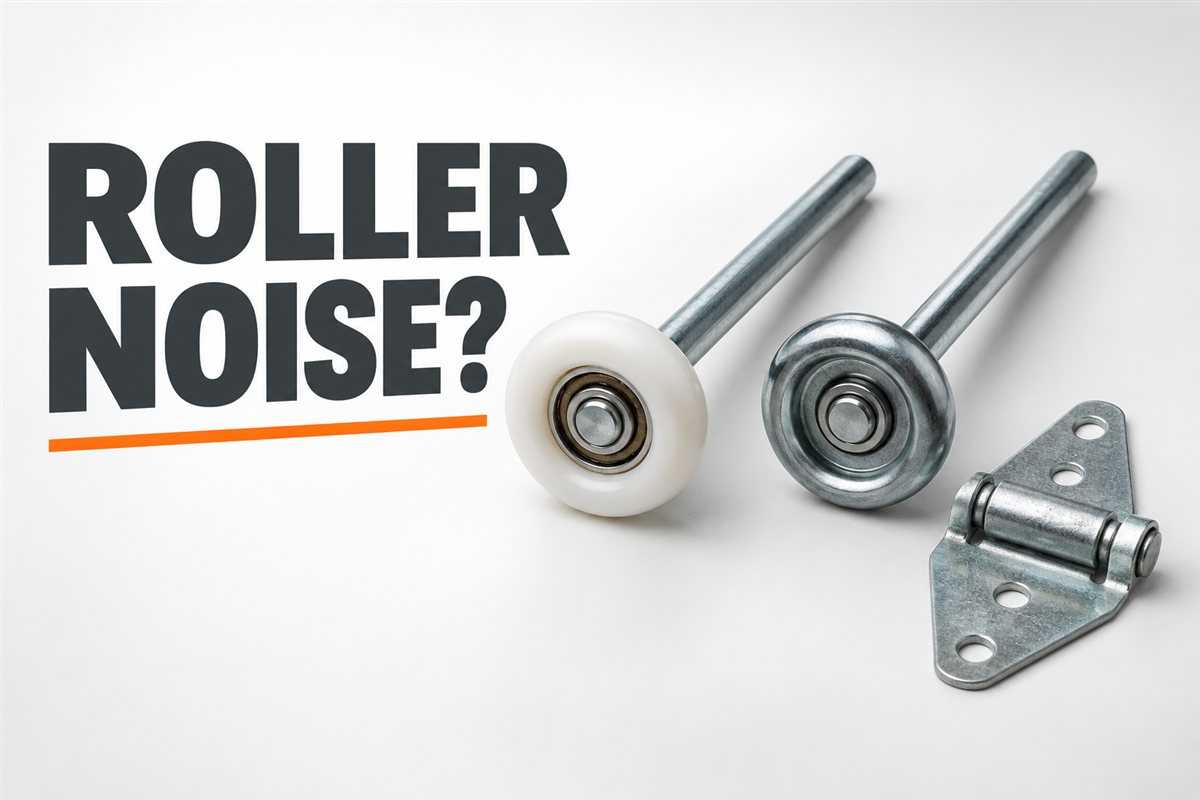

Garage door roller noise can come from worn wheels or bearings, but hinges, tracks, and other moving parts can sound similar. Record when the noise occurs and whether the door moves smoothly. Stop operation if a roller is displaced, the door is crooked, or movement becomes unstable; diagnosis should come before buying replacement parts.
Garage Door Roller Noise: Start with the Movement
A squeak, rumble, or grinding sound is a description, not a diagnosis. Note whether it occurs throughout travel, at one section of track, or near the opening and closing limits. The point in the cycle can help a technician decide where to inspect, especially when an intermittent noise is absent during the first visit.
Watch only from a safe position clear of the opening. Do not put fingers near rollers or hinges, reach into the track, or repeatedly cycle a door that is jerking or binding. If the symptom is new after an impact, tell the provider before using the door again.
Separate Noise from Signs of a Mechanical Problem
A noisy but stable door and a visibly displaced roller are different situations. The first may justify a planned inspection; the second can indicate an unsafe opening. A quieter sound after applying a product does not establish that a worn wheel, bearing, or track has been repaired.
| Observation | What it may suggest | What to report |
|---|---|---|
| Rumble throughout travel | Rollers, bearings, or multiple moving parts | When the sound begins and whether travel is smooth |
| Noise at one location | Local track contact or alignment issue | The location without touching moving hardware |
| Wheel appears displaced | Potential mechanical instability | Stop operation and describe the visible condition |
| Door jerks or becomes crooked | More than an ordinary noise complaint | Stop using the door and request inspection |
The table organizes observations rather than assigning a guaranteed cause. A worn roller can coexist with a track or hinge problem. Replacing one component without checking the rest of the opening may leave the original symptom unresolved.
What to Record Before a Service Visit
From an accessible location, note the door type, approximate installation date if known, and any visible manufacturer label. Record the sound, where it appears to originate, and whether movement is even. Mention recent maintenance, a vehicle impact, or any part replacement. Do not climb onto the door or move a damaged panel to obtain a label.
A short video from a safe distance may help if ordinary operation is still appropriate. Stop filming and discontinue operation if the door becomes unstable. Keep people, pets, and vehicles clear, and share the recording directly with the provider instead of posting private property details publicly.
Nylon versus Steel Is Only Part of the Choice
A roller replacement must suit the installed door and track. Wheel material alone does not establish compatibility, load suitability, bearing design, or stem dimensions. Ask the technician to identify the existing assembly before choosing parts based on a product photo or a claim that one material is always best.
Clopay’s replacement-parts guide discusses rollers among the components to inspect when operation is not smooth or quiet. Use the guidance for the actual equipment; a brand recommendation does not establish that every replacement fits every door.
Why Lubrication Is Not a Universal Repair
Use only owner maintenance permitted by the door manufacturer. The correct product and application points can differ with the roller and bearing design. Do not spray the entire track or treat any household oil as a suitable garage-door lubricant. If instructions are missing, ask the manufacturer or provider.
This article does not give roller-removal instructions. Some nearby fixtures are connected to the counterbalance system. Do not loosen bottom brackets, cable attachments, spring hardware, or track supports to chase a noise. The DASMA garage-door safety guidance explains why tension-related parts require trained service.
What a Useful Roller Inspection Should Clarify
Ask whether the noise actually comes from the rollers and whether track condition, hinges, or door alignment contribute. Confirm the part specification, scope of replacement, and any additional work requiring approval. Diagnosis, compatible hardware, and labor should be explained rather than bundled into an unexplained promise of silent operation.
The company publishes garage door roller replacement. Its residential garage-door services provide a broader destination if the inspection identifies another issue. Describe the symptom and confirm support for your equipment when booking.
After service, request normal-operation testing and an explanation of any remaining noise. Keep the invoice and maintenance instructions. A sound reduction is useful, but smooth, stable travel and appropriate safety verification matter more than a claim that a moving door will be completely silent.
Frequently Asked Questions
Does every squeak mean the rollers need replacement?No. Similar sounds can come from hinges, contact points, or other parts of the opening. Report the noise and the movement pattern rather than ordering rollers immediately. A technician should establish the source and check the surrounding assembly before recommending maintenance, adjustment, or replacement for the installed door. |
Are nylon rollers always the right upgrade?Not automatically. Material is one consideration alongside dimensions, bearing design, door requirements, and track compatibility. Ask for a part specification suited to your door. A quieter product description does not prove that an advertised roller is appropriate for every residential installation or that it will resolve another mechanical fault. |
Should I keep operating a door with a displaced roller?Stop using a door when a roller appears displaced or movement becomes unstable. Keep people and vehicles clear and request professional assessment. Do not try to push the wheel back into the track or adjust supports. The opening may have related damage or loading that cannot be assessed from appearance alone. |
Can I spray lubricant everywhere to stop the sound?Follow the manufacturer’s maintenance instructions for the installed components. Product choice and application points can differ, and indiscriminate spraying may be unsuitable. Lubrication cannot repair a damaged wheel or correct every alignment problem. If the required instructions are unavailable, ask before applying a product or taking hardware apart. |
What if the noise started after a vehicle impact?Report the impact and stop operation if there is visible damage, uneven travel, or binding. A wheel may not be the only affected component. Ask the provider to assess the track, panel attachments, and surrounding opening before treating the sound as an isolated maintenance issue or choosing replacement parts. |
Can a phone recording help the technician?A recording can help describe an intermittent sound if it can be taken safely during otherwise normal operation. Stay clear of the door and moving hardware, and do not operate an unstable assembly for a video. Include when the sound occurs and share the file directly with the provider. |
Do all rollers have to be replaced together?The appropriate scope depends on the installed parts, wear, and findings. Ask why the provider recommends individual or broader replacement and what compatibility requirements apply. Do not assume one universal replacement rule. Have any additional work and parts explained before authorizing the final repair scope for your door. |
Is roller noise the same as an opener problem?Not necessarily. A sound can travel through the assembly, making its source hard to identify from the floor. Tell the provider what the door does as well as what you hear. The inspection should separate roller and track movement from operator noise rather than assuming the motor needs replacement. |
How much should roller service cost?Request a quote based on the equipment, findings, compatible parts, labor, and any related repair. An unexplained flat figure may omit diagnosis or additional work. Ask what is included and what needs separate approval. This article does not provide a verified price for the company or every installation. |
What should I check after roller replacement?Ask for normal travel and applicable safety functions to be demonstrated according to the equipment’s instructions. Keep the service record and note any remaining or recurring symptom. Do not treat one quieter cycle as proof that every part is sound; follow the provider’s maintenance and follow-up guidance for your door. |
Final Thoughts
For garage door roller noise, the useful first decision is whether the door remains stable enough for normal operation. Record the sound pattern, avoid improvised repairs, and have the source confirmed before choosing rollers or another remedy.
For help in Mesa, call (480) 878-7890 or contact Garage Door Repair Near Me of Mesa. Describe the equipment and observed symptoms so the team can confirm service options and provide a quote.