

A dented garage door panel does not automatically require a complete new door. The right decision depends on the damage, how the door moves, section availability, and compatibility with the existing assembly. Stop operation after an impact if the door is crooked, binding, or damaged near hardware, and arrange an inspection before choosing cosmetic repair or replacement.
Dented Garage Door Panel: Appearance Is Only One Factor
A shallow mark in a broad flat area is different from a crease at a joint, a cracked attachment, or damage that changes the door’s shape. Photographs help describe the surface, but they cannot establish the condition of hidden reinforcement, joints, or surrounding components.
Tell the provider whether the dent followed an impact and whether the door has been operated afterward. Do not repeatedly cycle a damaged door to find out what happens. If travel has become uneven or the assembly binds, stop use and keep the opening clear.
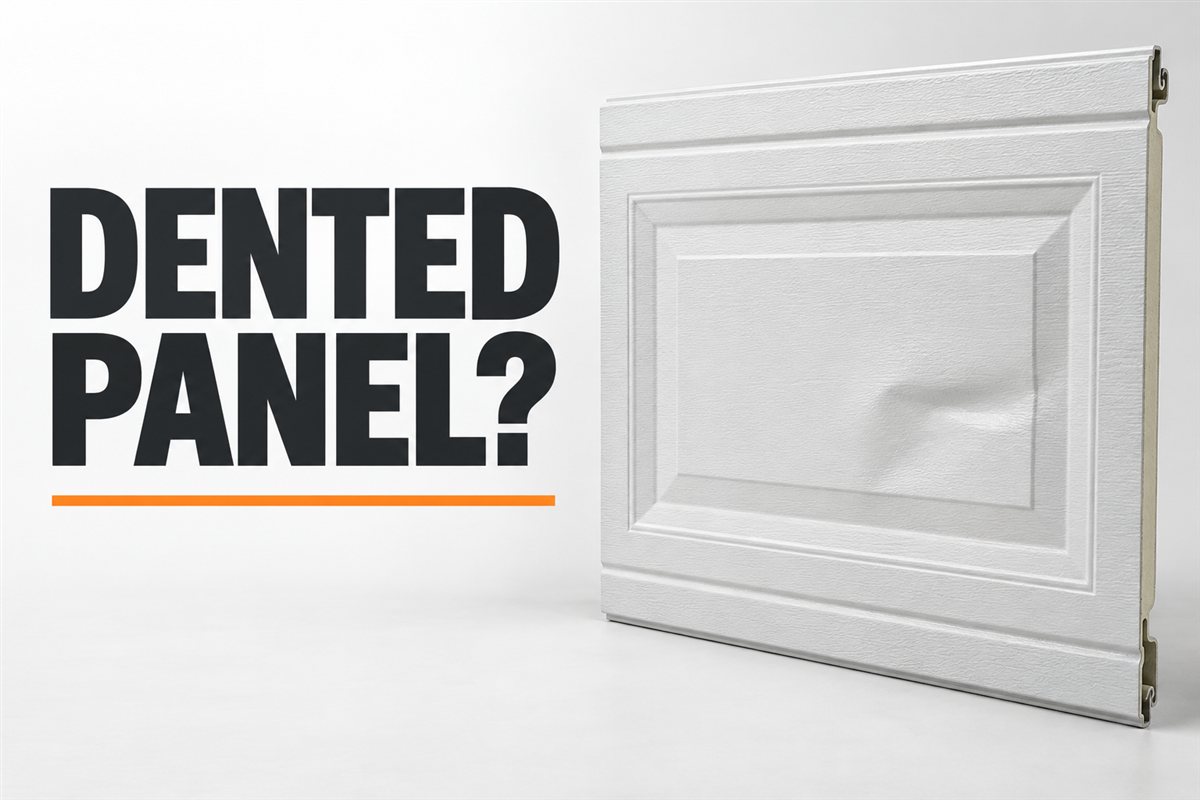
Cosmetic Damage versus an Operational Problem
A repair decision should consider both the section and the complete opening. Damage may affect only appearance, but it can also alter panel movement, seals, hardware attachment, or the relationship between sections. A door that still moves is not proof that every damaged part remains suitable.
| Observation | Decision to explore | Question for the inspection |
|---|---|---|
| Surface dent; no observed change in movement | Cosmetic repair or monitored condition | Is the section sound beyond its visible finish? |
| Crease near a section joint | Section integrity and fit | Are the joint and reinforcement affected? |
| Impact near hinge or roller attachment | Hardware and supporting section assessment | Is normal operation appropriate? |
| Several sections damaged | Broader repair versus full replacement | Which components and scopes are actually needed? |
| Compatible section unavailable | Alternative replacement plan | What exact compatibility prevents section-only work? |
Do not treat these observations as a remote assessment. A small-looking dent near an important attachment may deserve more attention than a larger surface mark elsewhere. The inspection should explain what remains sound and what needs correction.
What to Gather Before Requesting a Quote
Find the manufacturer, model, and any section-identification information in purchase records or an accessible label. Record the affected section, approximate age if known, and whether other panels show damage. Take photographs from a safe location without touching bent metal or moving the door.
Include a broad view and a closer view of the visible dent if access is safe. Explain any recent painting, modifications, or previous repairs. Do not climb onto the assembly or remove hardware to discover a label; the provider can advise which information is useful before the visit.
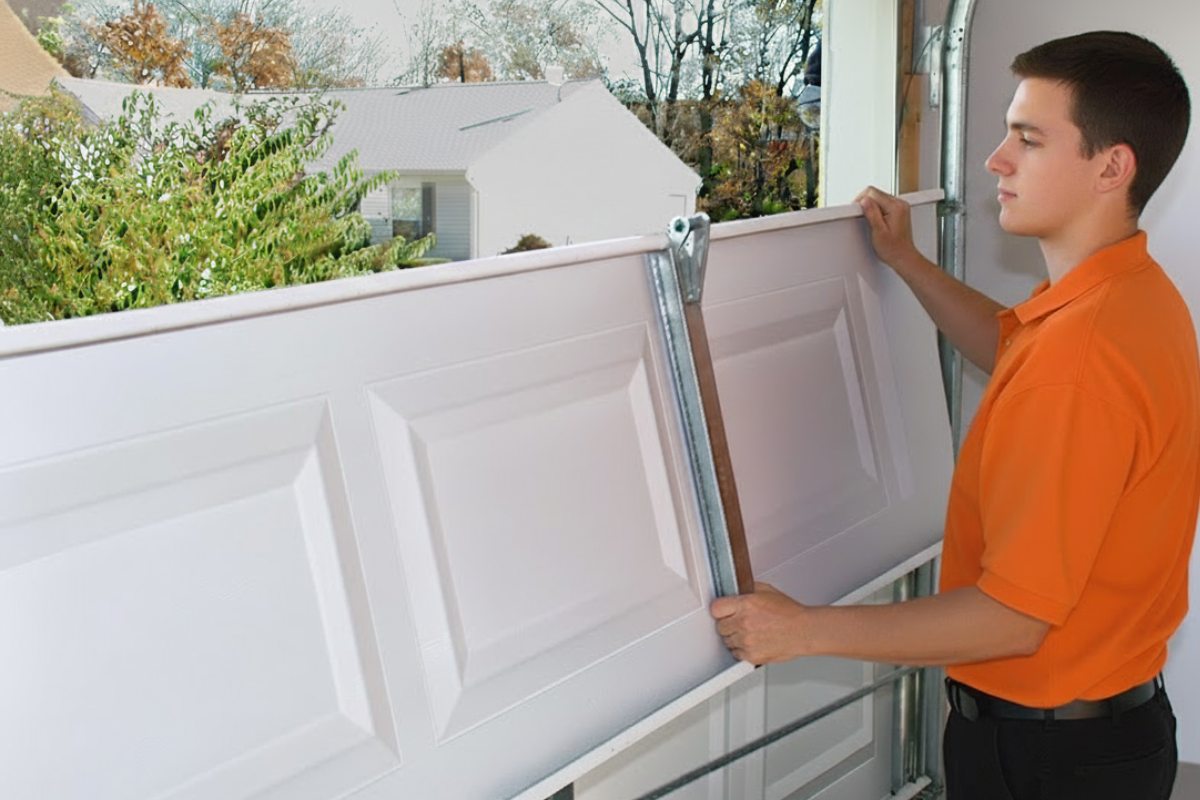
When a Single Replacement Section May Be Possible
A compatible replacement section can sometimes address localized damage, but appearance is not the only match requirement. Construction, dimensions, joint design, hardware preparation, weight, and availability matter. A panel advertised as a similar size is not automatically suitable for the installed door.
Clopay’s damaged-section guidance recommends evaluation of major damage and repair or replacement options. For your door, ask the manufacturer or technician whether a compatible section exists before assuming an exact replacement can be ordered.
Discuss finish differences too. An older door’s paint, exposure, and wear may make a new section look different even when its construction matches. Ask what matching and finishing work is included rather than expecting an invisible repair.
When the Whole Door Deserves Consideration
Multiple damaged sections, unavailable compatible parts, widespread deterioration, or damage to the surrounding opening may change the comparison. Ask the provider to explain why a broader replacement is being proposed. A full door is a decision based on findings and available options, not a default response to every dent.
Compare complete scopes: removal, compatible hardware, installation, finishing where applicable, and final testing. A replacement section may have related work, and a full replacement quote may omit items you expect. Ask for the differences in writing so that the options can be compared fairly.
Why Improvised Dent Removal Can Make the Decision Harder
Do not hammer a section, apply heat, add reinforcement, or remove attachments based on a generic online demonstration. Insulated, layered, and differently constructed sections can react differently. An attempted cosmetic fix may damage coatings or joints, and a neat exterior does not establish structural suitability.
Bottom fixtures and other attachments can involve stored forces. Leave section removal and tension-related work to an appropriate trained provider. This article compares decisions; it does not provide instructions for dismantling a door or changing its counterbalance.
Choose the Repair Plan around Your Actual Door
The company publishes garage door panel replacement and repair. Tell the team about the damage and ask whether your model can be assessed and sourced. If full replacement becomes the reasonable option, its new garage-door installation service is the related destination.
For a rented or managed property, confirm authorization and responsibility for finishing or replacement before ordering parts. If insurance may apply, ask the insurer about documentation and approval rather than assuming the claim covers any proposed work.
After the repair, request an explanation of what was replaced and normal-operation testing for the installed assembly. Keep the invoice, part information, and follow-up instructions. Report new scraping, binding, or unusual movement instead of continuing to use the door until it worsens.
Five planning checks for a dented garage door panel
1. Record location and behavior separately
Identify the damaged section and describe where the mark lies in relation to joints and visible hardware. Then describe any change already noticed in ordinary movement. Those are separate observations. Do not operate the door repeatedly to decide whether the damage is cosmetic. Preserve the existing condition and tell the provider why operation was stopped.
A dented garage door panel near a hinge attachment needs a different description from a broad surface mark away from hardware. Photographs can show that distinction without establishing the condition of hidden parts. State what the images do and do not show. An honest limit on visibility is more useful than assuming the inside of a section is sound.
2. Identify the equipment from existing records
Look for a purchase invoice, installation record, manual, or safely accessible label. A manufacturer’s name and model information can help the provider assess section availability. Do not remove attachments to find identification. If the original paperwork is missing, ask what views or information would help the technician identify the door during the assessment.
For a dented garage door panel, matching the width alone is not enough to select a replacement. Ask the provider to explain the relevant construction and joint requirements for your equipment. Keep any proposed part identification with the estimate. A generic listing that resembles the installed door does not establish a suitable section for the complete assembly.
3. Keep appearance and operation as separate outcomes
Tell the provider whether the main concern is the visible finish, a change in movement, or both. Ask what a proposed cosmetic repair is expected to improve and what limitation may remain. If a replacement section is proposed, ask separately about structural compatibility and the likely appearance alongside the existing sections.
An older finish may differ from a newly supplied section even when the equipment match is appropriate. Discuss whether painting or other finishing is included, who performs it, and when it occurs. Do not assume that a repair quote promises an invisible color match unless that outcome has been specifically addressed by the responsible provider.
4. Compare complete repair and replacement scopes
A dented garage door panel assessment may lead to more than one option. Ask what each proposal includes and why the provider considers it suitable. Compare the affected section, related hardware, removal, installation, finishing, and agreed testing where applicable. A smaller headline price may describe a different amount of work rather than a better value.
If a complete new door is recommended, request the finding or availability issue behind that recommendation. Conversely, ask what remains outside a section-only proposal. Keep the comparison connected to the actual condition instead of assuming either the smallest repair or the broadest replacement is always preferable. Written scopes make the decision easier to evaluate.
5. Confirm approval before parts are ordered
For a rented or managed property, identify who approves the work and who controls the appearance of the exterior. Tell the provider whether the owner or manager must review a proposal before ordering. Coordinate any required attendance and access arrangements. A tenant’s report of damage is useful information without automatically resolving responsibility for the final scope.
If you intend to ask an insurer about the event, follow its documentation and approval process before assuming reimbursement. Keep photographs, the factual event description, and estimates together. The provider’s recommendation explains a repair option; the insurer separately determines what its policy and process cover. Do not treat those two decisions as interchangeable.
Use a short comparison record
For each option, record the proposed outcome, compatible parts, remaining limitations, included finishing, and the approval needed. Note any lead time quoted for the actual part rather than relying on general availability claims. Ask how a finding made during work would change the proposal and who must authorize the additional scope.
Keep the dented garage door panel complaint visible when discussing upgrades. A preference for a new style or added feature can be considered, but it is a separate choice from addressing the present damage. Ask the provider to distinguish work required by the finding from optional changes so the approved plan reflects your actual priorities.
What a useful handover should explain
Ask which sections and related components were assessed or replaced and which normal-use checks were included. Retain product and part information where the authorized owner can find it. If finishing remains to be completed by another contractor, record that task and its responsible person instead of assuming it was part of the mechanical service.
The completion record should address both the approved repair and any remaining limitation. If the dented garage door panel was treated cosmetically, ask what was established about its suitability and what follow-up is recommended. If a section was replaced, keep the compatibility and installation information with the invoice for future maintenance or repair decisions.
Report a later change without introducing another repair
If new scraping, binding, or uneven movement appears, report the observation and service date promptly. State whether it resembles the original complaint and whether another impact or modification occurred afterward. Do not hammer the surface or change attachments to see whether the sound improves. Preserve the condition for an appropriate assessment.
Share the agreed practical instructions with other household users. Keep any stop-use limitation clear until the responsible provider explains the next step. A completed visual improvement is useful only within the scope actually approved; it should not replace the discussion of movement, equipment compatibility, and remaining findings for the whole opening.
Before the visit, update the provider if access or authorization changes. Have the existing records available and keep the affected opening clear without moving damaged equipment. If the approved scope changes after assessment, retain the revised description with the original estimate so the final invoice can be understood against the work you actually authorized.
Frequently Asked Questions
Can just one dented section be replaced?Sometimes, if a suitable section is available and the rest of the assembly is appropriate for continued use. The provider must check construction, dimensions, joints, and other compatibility requirements. Ask for confirmation specific to your door rather than assuming that a panel with a similar appearance will fit. |
Does a dent always affect how the door works?No, but appearance alone cannot establish whether the damage is only cosmetic. Location, construction, joints, and hardware attachments matter. Report any change in movement and arrange an assessment after an impact when suitability is uncertain. A door continuing to move does not prove every damaged component is sound. |
Should I keep using the door after hitting it?Stop operation if the door is crooked, binding, unstable, or damaged near moving hardware. Keep people and vehicles clear and describe the impact to the provider. Do not run repeated cycles to test the damage. Ask for guidance based on the opening’s actual condition before returning it to ordinary use. |
Will the replacement panel match the old color?An exact visual match is not guaranteed. Existing paint, finish aging, sunlight exposure, and product availability can create differences. Ask whether the proposed section matches structurally and what finishing work is included. Compatibility of the assembly and appearance of the repair are related but separate decisions to clarify. |
Can I use a panel from another manufacturer?Do not assume that a similar-sized section from another brand is compatible. Joint geometry, construction, weight, and hardware preparation can differ. Ask the door manufacturer or provider to confirm suitability. Choosing by width or appearance alone can leave an assembly that does not operate as intended after replacement. |
Will replacing a panel change the door balance?A section change can affect the assembly, so the provider should assess the complete door and any required setup or verification. Ask how compatibility and operation will be checked after work. Do not make spring or cable adjustments yourself to compensate for a section that seems heavier or lighter. |
Can a dent be pushed out from inside?The appropriate approach depends on the damage and the section’s construction. Do not apply a generic method to an insulated, layered, or otherwise unidentified panel. Ask whether cosmetic repair is suitable and what limitations remain. Surface improvement alone does not confirm that joints, reinforcement, and attachment points are sound. |
When is a new door more practical?The comparison can change when multiple sections are damaged, suitable parts are unavailable, or the opening has broader deterioration. Ask the provider to explain the findings and compare complete scopes. Avoid deciding from one headline price; include related work, finishing, installation, and testing where those items apply. |
What documentation helps with an insurance claim?Ask your insurer about its requirements before approving work that you expect to claim. Photos, a description of the event, inspection findings, and itemized estimates may be relevant, but coverage and approval vary. Keep records and avoid assuming that a repair recommendation itself establishes reimbursement or policy coverage. |
What should be checked after section replacement?Ask for normal travel and applicable protective functions to be verified according to the installed equipment. Confirm what hardware and finishing work were included and keep the part record. If scraping, binding, or unusual movement appears later, stop inappropriate use and report it instead of treating appearance alone as success. |
Final Thoughts
For a dented garage door panel, compare more than appearance: damage location, operating condition, compatible parts, and the complete repair scope. Have the opening assessed before committing to cosmetic work, a replacement section, or a new door.
For help in Mesa, call (480) 878-7890 or contact Garage Door Repair Near Me of Mesa. Describe the equipment and observed symptoms so the team can confirm service options and provide a quote.