

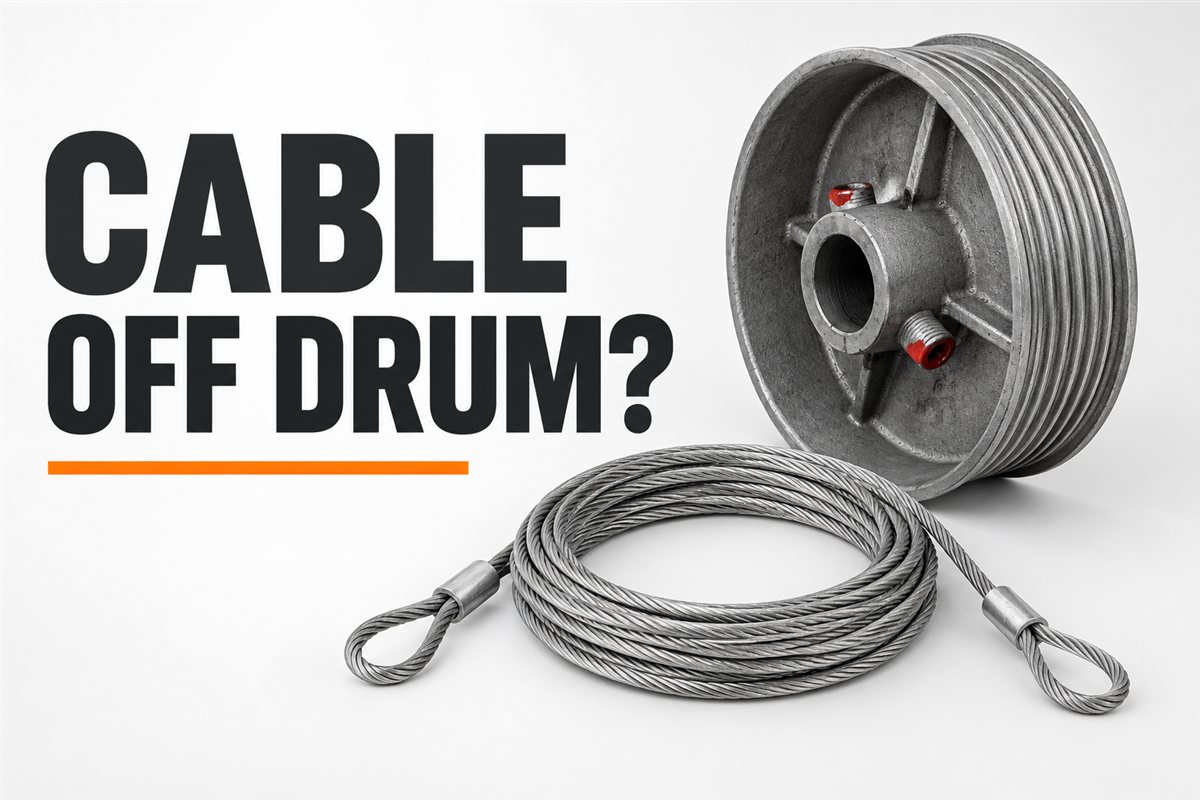
A commercial roll-up door hard to open needs an assessment of the curtain, guides, operating method, and counterbalance assembly. Do not add force or bypass controls to keep a damaged opening working. Keep traffic clear, notify the responsible manager, and document the symptom so a qualified provider can plan the correct service.
Commercial Roll-Up Door Hard to Open: Identify the Equipment
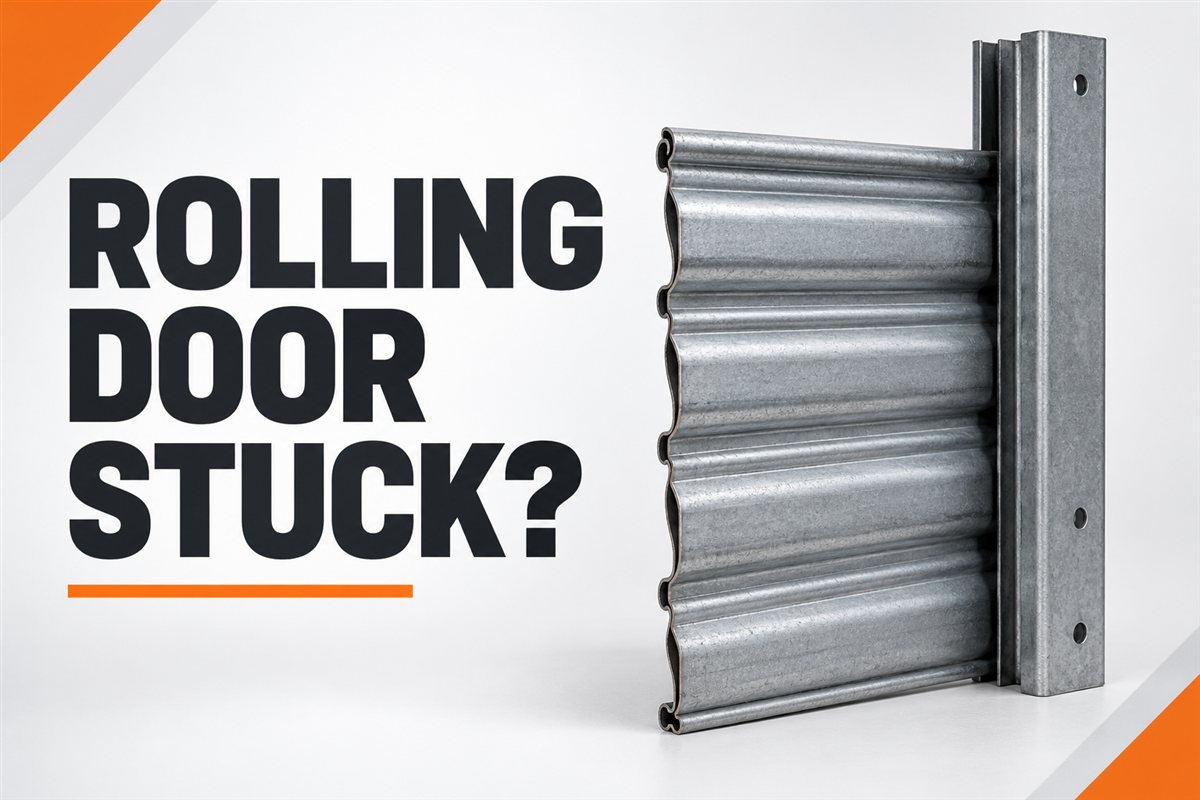
A rolling steel curtain coils above the opening and uses guides along its sides. A sectional overhead door uses a different arrangement. Identifying the actual equipment matters because troubleshooting, compatible parts, and maintenance requirements are not interchangeable between those designs.
Record the manufacturer and model from accessible records or labels. State whether the door is push-up, hand-chain operated, or motorized. Tell the provider whether the opening serves storage, deliveries, or a controlled facility area. Do not remove a hood or climb into the assembly to locate identification.
Why Extra Force Is Not a Diagnosis
Resistance can arise from contact, damage, guide condition, an operating-system issue, or another fault. The point at which the curtain resists and any recent impact are useful clues. Pulling harder on a chain or continuing to run the operator does not establish which part needs repair.
A manufacturer maintenance manual is the authority for the specific door. A Cornell service-door manual treats excessive opening force and other operation issues as service considerations. Its instructions apply to the covered equipment, not every door that looks similar.
Organize the Symptom before Calling
| Observed condition | What to communicate | Immediate operational decision |
|---|---|---|
| Manual door needs unusual effort | Operating method and when effort changed | Stop forcing it and arrange assessment |
| Curtain scrapes at one side | Location and any visible impact | Keep traffic away from the affected opening |
| Operator sounds active without normal travel | Control response and equipment model | Do not keep cycling or override protection |
| Curtain partly raised and jammed | Position and any required access | Keep the area clear; do not pass beneath |
| Repeated stoppage at the same position | Repeatable point and existing records | Request model-specific diagnosis |
This table does not authorize a repair or identify a failed part. A door can have several related problems, particularly after vehicle contact. Ask for the curtain, guides, operator where applicable, and surrounding attachments to be evaluated within the provider’s appropriate scope.
Protect People and Workflow First
Keep staff, forklifts, and delivery vehicles away from an unstable or jammed opening. Notify the facility manager so routine operation is not attempted by another shift. Do not stand beneath a partly raised curtain or use a vehicle, jack, or improvised support to hold or move it.
If the doorway affects a required exit route, rated assembly, or other life-safety function, involve the responsible professionals promptly. Do not add an improvised restraint, change controls, or declare the opening compliant based on a general article. The applicable building and equipment requirements need separate verification.
For a production facility, record access restrictions and delivery needs when booking. A planned alternate route may help operations, but it should be arranged by the responsible manager without exposing people to the damaged door.
What to Record without Dismantling the Door
Note the curtain position, where resistance begins, and whether you heard grinding, scraping, or a sudden change. Describe visible guide damage, a displaced bottom bar, an impact, or recent work. Avoid repeatedly cycling the door simply to recreate the symptom for a video.
Provide existing service records and accessible identification. For motorized equipment, report the displayed error or normal control response without opening electrical panels or changing settings. If a safety device or control appears faulty, explain that explicitly instead of calling it only a difficult opening.

How Manual and Motorized Doors Change the Service Request
A hand-chain complaint should identify whether the chain moves normally and what the curtain does, based only on observations already made. Do not take up tension or alter gearing yourself. Counterbalance and operating components can store energy or require procedures that are specific to the installation.
For a motorized door, tell the provider whether the operator is silent, sounds active without normal movement, or stops at a repeatable point. Do not bypass an interlock, sensing edge, or other protective function to distinguish causes. Qualified diagnosis should preserve the intended control and safety arrangements.
Confirm Capability and the Scope of Work
The company lists commercial rolling steel door service. Confirm support for your manufacturer, operating method, and opening before dispatch. Its commercial garage-door services provide the broader route for related facility needs.
If motorized equipment is involved, the published commercial door operator and opener repair page identifies the related service. It does not establish compatibility with every installed system; describe the equipment and ask.
Ask what inspection, parts, labor, access arrangements, and testing are included. Confirm what would need separate authorization and whether ordered parts could affect the work. Avoid assuming an arrival time or return-to-service date until the provider has confirmed the actual scope.
Return to Use with a Clear Record
Request the findings, completed repairs, and any remaining concerns in writing. Ask for operation and applicable protective functions to be demonstrated using the equipment’s requirements. Tell the responsible staff what changed and who manages follow-up; do not let a second shift improvise adjustments afterward.
Discuss a maintenance plan suited to the actual duty and environment rather than a universal interval. Keep the manual and service log accessible to authorized personnel. Renewed resistance, scraping, or abnormal control behavior should be reported before the fault becomes a routine workaround.
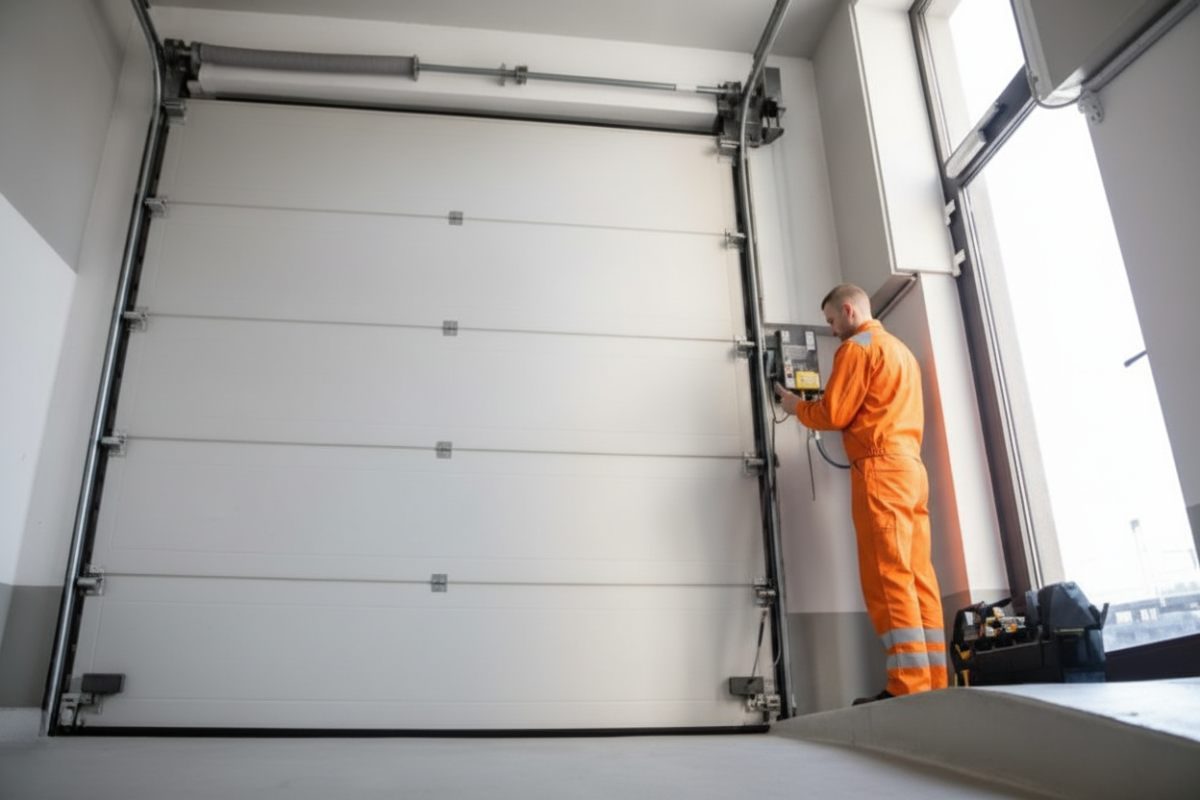
Five reporting checks for a commercial roll-up door
1. Identify the opening and operating method
Use the facility’s door identifier or a precise location so the provider knows which opening is involved. State whether the equipment is manual, hand-chain operated, or motorized. Include the manufacturer and model from existing records where available. Do not treat the operator’s brand as identification of every component in the door assembly.
A commercial roll-up door request should make the present condition clear before discussing parts. Tell the provider whether the curtain is closed, partly raised, or open, and whether traffic normally passes through the opening. Keep that information factual. Do not move a jammed curtain to obtain a measurement or demonstrate that another operating method also meets resistance.
2. Describe effort, movement, and control response separately
Report the change already observed during ordinary use. For a manual opening, describe when unusual effort began and whether the curtain moved evenly. For motorized equipment, report the existing control response and what the curtain did next. Those observations help organize the assessment without requiring staff to alter settings or bypass protection.
If the commercial roll-up door stops near the same position, include that repeatable point in the history. A repeated location is useful information but does not establish a failed component. Keep any existing error message or service record with the request. Avoid cycling damaged equipment to decide whether the symptom can be reproduced for a visitor.
3. Record recent events and previous work
Tell the provider about vehicle contact, obstruction, an unusual sound, or approved work before the problem appeared. Give the timing without assigning responsibility before inspection. If several shifts use the opening, gather the factual observations already available from the responsible staff. Do not ask someone to operate an uncertain door to recreate another person’s account.
Keep the commercial roll-up door service history in one place. An earlier invoice may identify the equipment and what was previously changed. Ask the provider which details are relevant before sending a large collection of records. Share operational information through the authorized contact route and avoid distributing access credentials or unrelated facility security details.
4. Confirm who approves assessment and repair
Identify the manager or owner authorized to approve the visit and additional work. In a leased building, responsibility for the door, operator, and surrounding building work may need coordination. Arrange that approval before parts are ordered. Give the provider a reliable contact for recommendations that cannot be resolved by the employee present at the opening.
Explain site restrictions, work windows, delivery needs, and any existing alternate route. The responsible manager should coordinate workflow while keeping people away from the affected equipment. A production deadline does not explain the mechanical cause or justify improvised operation. Keep the actual door condition central when asking about service availability.
5. Define the expected handover
Ask which functions will be evaluated and how the completed work will be recorded. For a commercial roll-up door, the handover should identify the findings, approved repairs, and applicable operating checks. Ask what remains outside the scope and who should arrange any further assessment. An unexplained return of movement is not a complete description of the result.
Confirm who receives the final report and communicates it to other shifts. Include any continuing restriction or follow-up recommendation in that communication. Staff should know the approved operating arrangement and who manages recurrence. Avoid allowing an undocumented workaround to become routine merely because it appeared to complete one opening cycle.
Compare proposals by their actual scope
An initial quote may cover an assessment rather than a complete repair. Ask what parts, labor, access arrangements, and checks are included and which findings require separate approval. If equipment availability affects completion, request information specific to the identified part. Do not assume a general service description guarantees every component will be present at the first visit.
When another provider offers a different proposal for the commercial roll-up door, compare the same symptom report and requested outcomes. One recommendation may address an operator issue while another concerns the curtain or guides. Ask each provider to explain the finding behind its scope. A fair comparison depends on understanding the work, not just the total.
Keep maintenance advice tied to the installation
Ask for the relevant product instructions and maintenance recommendations for the actual equipment and duty. The appropriate plan should reflect the installation and the provider’s findings rather than a universal interval copied from another facility. Keep the manual and inspection record available to authorized personnel who arrange future service.
Separate permitted routine tasks from work requiring trained service. If instructions are unclear, ask before staff apply products, remove covers, or alter components. A changed sound or reduced resistance after an undocumented adjustment does not establish what was corrected. Preserving an accurate record is useful when an intermittent complaint returns.
Report commercial roll-up door recurrence through one contact
If the commercial roll-up door becomes difficult again, report the service date and comparable observations. State whether the effort, stopping point, control response, and curtain position resemble the original condition. Include any later impact or approved work. Keep the area clear as appropriate and avoid additional experiments while the response is coordinated.
A single responsible contact can consolidate observations from different shifts without turning them into a guessed diagnosis. Keep the original request, completed work, and new symptom together. That record supports a clearer follow-up assessment and helps ensure an outstanding recommendation is not lost between staff changes or separate contractor visits.
If the equipment identification or facility contact changes, update the commercial roll-up door service request before dispatch. Confirm who will receive recommendations and approve additional work so the visit can proceed with an accurate description of the opening.
Frequently Asked Questions
Is a rolling door the same as a sectional overhead door?No. A rolling curtain coils above the opening, while sectional equipment uses a different panel and track arrangement. Identify the actual type before requesting parts or applying maintenance advice. Manufacturer and model information help the provider confirm capability and plan the correct inspection for your facility’s installed door. |
Should staff pull harder on the operating chain?Do not add force to overcome an unexplained change in operation. Resistance may involve a jam, damage, or another fault that needs assessment. Notify the responsible manager and keep traffic clear. Report what was observed without dismantling the assembly or changing the operating arrangement to maintain production. |
What if the motor runs but the curtain does not move?Report that exact behavior and the equipment model, then stop repeated operation. Different mechanical or operator faults can produce it. Do not assume the motor is sound, disconnect drives, or bypass protective devices to experiment. A provider should diagnose the installed assembly and explain the proposed work. |
Can the opening remain in use after forklift contact?Stop use if contact has left damage, binding, a displaced curtain, or an unstable opening. Keep vehicles and people clear and report the event to the facility manager. The provider should assess the affected equipment rather than relying on the fact that the door completed one cycle after impact. |
Should a partially open jammed door be forced closed?Do not force, support, or move a jammed curtain with improvised equipment. Keep people away from beneath it and explain the position when requesting service. The responsible manager should coordinate access and security needs with qualified assistance rather than allowing routine traffic through an unstable opening. |
Can maintenance intervals be the same for every facility?No single interval suits every product and duty. Follow the manufacturer’s requirements and a plan based on actual operation and findings. Keep service records and report changing resistance promptly. A low-use storage opening and a frequently cycled production door should not automatically receive identical maintenance assumptions. |
Who should authorize a repair in a leased warehouse?Coordinate with the owner, property manager, or other authorized facility representative before changes are made. Clarify responsibility for the door, operator, and related building work. The provider needs to know who can approve diagnosis and additional scope, particularly where access restrictions or shared operations affect the visit. |
Does repair automatically prove code compliance?No. Restoring movement does not by itself establish that every applicable building, rated-door, exit, or control requirement has been met. Ask the appropriate responsible professionals about required verification for the specific opening. Avoid treating an invoice, general article, or one successful cycle as a universal compliance statement. |
What information helps reduce an unproductive first visit?Provide accessible manufacturer and model details, the operating method, door position, observed symptoms, and any recent impact or service. Describe site-access requirements and who can authorize work. Useful records help preparation but do not replace inspection or guarantee that every part will be available during the first visit. |
What should the service record include?Ask for the findings, completed work, relevant replacement parts, and any remaining recommendations or operating restrictions. Confirm what testing was performed for the actual equipment. Keep the record available to authorized staff so that later symptoms can be reported accurately rather than addressed through undocumented adjustments between shifts. |
Final Thoughts
For a commercial roll-up door hard to open, stop adding force and organize the service request around the real equipment and symptom. Protect the opening, obtain the correct authorization, and verify the completed work before returning it to normal facility use.
For help in Mesa, call (480) 878-7890 or contact Garage Door Repair Near Me of Mesa. Describe the equipment and observed symptoms so the team can confirm service options and provide a quote.