



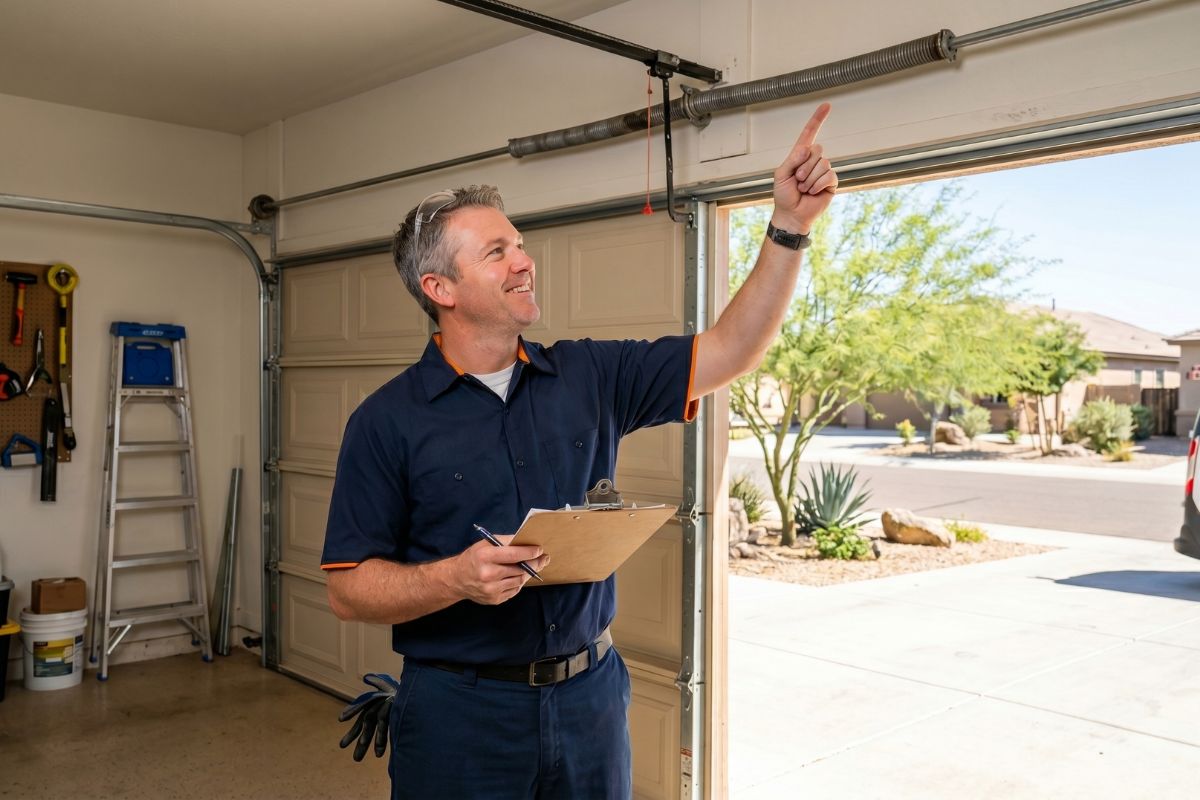
That sudden grinding noise when your garage door opens. The slight hesitation halfway down. The cable that looks just a little frayed compared to last month. These small warning signs often go ignored until the morning you’re running late and the door simply refuses to budge — or worse, until something breaks under hundreds of pounds of tension. The good news is that a simple monthly garage door safety test takes about ten minutes, requires no specialized tools, and can prevent the vast majority of catastrophic failures we see in the field. Let’s walk through exactly how we recommend doing it.
At Garage Door Repair Near Me Mesa, our certified technicians have spent years inspecting residential systems across the Valley of the Sun, and we’ve watched preventable injuries and expensive emergency calls happen for the same handful of reasons. A consistent monthly inspection is the single most effective habit a Mesa homeowner can build to protect their family, their vehicles, and their wallet.
⚠️ Safety Warning: Read Before You Begin
Garage doors are the largest moving object in most homes. Torsion springs hold tremendous stored energy — enough to cause severe injury or death if mishandled. Never attempt to adjust, loosen, or remove springs, cables, or the bottom bracket yourself. The inspection steps below are visual and functional checks only. If anything feels wrong, looks damaged, or sounds off, stop immediately and call a trained professional from our Mesa team. Disconnect the opener from power before touching any moving parts.
Why a Monthly Garage Door Safety Test Matters More Than You Think
Your garage door cycles roughly 1,500 times per year in the average household. Each opening and closing places stress on torsion springs, cables, rollers, hinges, and the opener motor. Heat — and Mesa summers deliver plenty of it — accelerates wear on rubber seals, lubricants, and electronic components. Add in monsoon dust, and you have a perfect storm for premature component failure.
A monthly garage door safety test catches the small problems before they become four-figure repairs. We’ve responded to countless emergency calls that started as a faint squeak weeks earlier. By committing ten minutes a month, homeowners we serve through our residential garage door services typically extend the lifespan of their systems by three to five years.
| Inspection Approach | DIY Monthly Check | Professional Tune-Up |
|---|---|---|
| Time Required | 10 minutes | 45–90 minutes |
| Tools Needed | Eyes, ears, level, broomstick | Calibrated tools, winding bars, force gauges |
| What It Catches | Visible wear, alignment, sensor function | Spring tension, track precision, opener calibration |
| Recommended Frequency | Every 30 days | Once or twice per year |
| Average Cost | Free | $95–$175 |
| Best For | Spotting early warning signs | Adjustments, balancing, lubrication, full diagnostics |
The Three Hidden Costs of Skipping Inspections
- Emergency service fees: Same-day repairs cost significantly more than scheduled maintenance through our preventive maintenance program.
- Cascading damage: A worn roller can warp a track; a misaligned track can burn out a motor — issues our track and roller specialists see every week.
- Insurance and liability: Injuries from neglected doors are rarely covered without documented maintenance.
The 10-Minute Monthly Inspection Walkthrough
Here’s the exact sequence our trained Mesa technicians recommend. Move through it from top to bottom, and don’t skip steps even if everything appeared fine last month.
Step 1: The Visual Sweep (2 minutes)
With the door closed, stand inside the garage and look up. Examine:
- Torsion springs mounted above the door for gaps, rust, or stretching.
- Cables on either side for fraying, kinks, or corrosion.
- Rollers for cracks, missing bearings, or excessive wobble.
- Hinges and brackets for loose hardware or bent metal.
- Bottom weather seal for cracks that compromise both insulation and home security — something our weather seal replacement team addresses constantly during Mesa’s monsoon season.
Step 2: The Balance Test (2 minutes)
Pull the red emergency release cord to disconnect the opener — whether you have a LiftMaster, Chamberlain, Genie, or another major brand. Manually lift the door halfway. A properly balanced door will stay in place. If it slams down or shoots up, the springs are out of calibration and need professional adjustment. This is one of the most important diagnostic steps, and it’s covered in detail when our spring repair specialists arrive on-site.
Step 3: The Photo-Eye Sensor Test (1 minute)
Reconnect the opener and close the door using the wall button. As it descends, wave a broomstick across the photo-eye beam near the floor. The door should immediately reverse. If it doesn’t, the sensors are misaligned, dirty, or failing — a federal safety requirement since 1993. Our sensor and opener team handles this calibration regularly across Mesa neighborhoods.
Step 4: The Auto-Reverse Force Test (2 minutes)
Place a roll of paper towels flat on the ground in the door’s path. Close the door. When it contacts the roll, it should reverse within two seconds. A door that crushes the roll is exerting unsafe force and needs the down-force setting adjusted. Skip this step if you have small children or pets — and instead schedule a visit through our priority service line.
Step 5: The Listen Test (1 minute)
Run a full open-and-close cycle. Listen for grinding (worn rollers), popping (broken spring coils), straining (motor stress), or rattling (loose hardware). New noises are the system’s way of asking for help, and our diagnostic technicians are trained to translate those sounds into specific repairs.
Step 6: The Lubrication Check (2 minutes)
Apply a lithium-based or silicone garage door lubricant to rollers, hinges, and the spring coils. Never use WD-40 — it’s a degreaser and strips protective coatings. Proper lubrication is one of the simplest tasks our maintenance plan customers learn during their first tune-up.
Common Issues a Garage Door Safety Test Reveals
Worn Torsion Springs
Most residential springs are rated for 10,000 cycles — about seven years of average use. Mesa’s heat shortens that lifespan. A snapped spring is the number one reason for emergency calls handled by our 24-hour emergency team.
Frayed Cables
Cables work alongside springs to lift the door safely. Even a single broken strand reduces tensile capacity dramatically. Replacement is never a DIY job — it’s specifically the kind of repair our cable replacement specialists are certified to handle.
Misaligned Tracks
A track that’s even ¼ inch out of plumb forces the opener to work harder, accelerating motor wear. We see this constantly during track adjustment service calls throughout the East Valley.
Outdated Openers
Openers older than 2005 may lack rolling-code encryption, leaving your home vulnerable. Modern units with smart home integration through MyQ, HomeLink, or Apple Home offer dramatically better security. Our team handles complete opener installation and upgrade projects across Mesa.
When DIY Ends and Professional Service Begins
The monthly inspection is empowering — it puts you in control of your home’s safety. But certain repairs cross a clear line. Anything involving spring tension, cable replacement, bottom bracket service, or panel replacement requires trained hands. The torque stored in a residential torsion spring can exceed 200 pounds of force, and the tools required are specialized winding bars that homeowners simply shouldn’t keep in their garages.
This is where the experience and certifications of our team matter. Every technician at Garage Door Repair Near Me Mesa completes manufacturer-specific training, carries proper liability coverage, and follows IDA (International Door Association) safety protocols. Our reputation in the Mesa community has been built on transparent pricing, written warranties, and a positive track record reflected in our online reviews. You can verify our credentials and read homeowner feedback directly on our Google Business listing.
Curb Appeal and Long-Term Value
A well-maintained garage door contributes more to curb appeal than almost any other exterior element — second only to the front door itself. Real estate appraisers consistently rate replacement and refinishing among the highest-ROI home improvements. Routine inspections protect that investment, and our panel and finish refresh services keep the door looking sharp through Arizona’s harsh sun cycles.
Smart Home Integration
Modern homeowners increasingly want their garage door to communicate with the rest of their connected home. We help integrate openers with security cameras, smart locks, and home automation hubs through our smart opener configuration service. It’s a simple upgrade that adds genuine peace of mind.
Frequently Asked Questions
How often should I perform a garage door safety test?
We recommend a complete monthly inspection for every residential garage door. In Mesa specifically, the combination of extreme summer heat and monsoon dust accelerates wear, so consistent monthly checks are even more important than in milder climates.
What’s the most dangerous part of a garage door?
The torsion springs and bottom brackets store enormous amounts of energy under tension. These components cause the majority of serious garage door injuries and should never be adjusted or removed by anyone without professional training and proper winding bars.
Can I replace a garage door spring myself?
We strongly advise against it. Spring replacement requires specialized winding bars, precise torque measurement, and an understanding of cable-drum geometry. Our certified technicians handle this safely every day, and the cost of professional replacement is far lower than the cost of an emergency-room visit.
Why does my garage door reverse before fully closing?
The most common causes are misaligned photo-eye sensors, dirty sensor lenses, or a down-force setting that’s too sensitive. Sometimes a track obstruction or a worn roller is the underlying issue. A professional diagnostic visit identifies the exact cause quickly.
How long should a residential garage door last?
A quality steel door typically lasts 20–30 years with proper maintenance. The opener motor generally lasts 10–15 years, and torsion springs need replacement every 7–12 years depending on cycle count. Mesa’s climate tends to push these timelines toward the lower end of each range.
Do you offer same-day service in Mesa?
Yes. Our team responds to most emergency calls in Mesa within 60–90 minutes, and we offer same-day appointments for non-emergency repairs whenever scheduling allows. You can reach us through our website or stop by our verified Google Maps location.
Building a Safer Home Starts This Weekend
The ten minutes you invest each month in a thorough garage door safety test compound into years of reliable performance, lower repair bills, and genuine peace of mind for your family. Mesa homeowners who build this habit avoid the 2 a.m. spring failures, the stuck-door mornings before a meeting, and the slow drift toward a system that quietly becomes unsafe. If you found this walkthrough useful, you may also appreciate our companion piece on recognizing the early signs of opener motor failure — it pairs naturally with the inspection routine above.
When the inspection reveals something beyond a quick lubrication or a sensor wipe, that’s our cue to step in. Our certified Mesa technicians arrive in fully stocked trucks, provide written estimates before any work begins, and stand behind every repair with a warranty in writing. Schedule your professional tune-up directly through Garage Door Repair Near Me Mesa, give our local Mesa team a call to discuss your specific situation, or visit our Mesa Google Maps listing to read recent reviews and get directions to our service area. We’re ready to help you keep the largest moving part of your home running safely — and we’d be honored to earn your trust.
📞 Ready to schedule your professional inspection? Contact our Mesa team today or visit our Google Business listing to book same-day service.