
Your opener rarely fails “out of nowhere.” In Mesa, most breakdowns start when mechanical load climbs above normal—springs lose counterbalance, tracks bind, rollers wear flat, or cables drift on the drums. The opener compensates by pulling harder, which spikes motor torque load, heats the electronics, and accelerates wear in gears, belts/chains, and limit systems.
If you’re dealing with a garage door opener failing in Mesa, AZ, start with a professional evaluation of both the operator and the door system. In many cases, targeted garage door opener repair and installation restores reliable operation—especially when the underlying load problem gets corrected at the same time.
For a complete view of options, review our garage door services, confirm coverage across our service areas, or contact us to schedule a diagnostic.
Mesa’s heat and dust change everything: expansion can shift alignment, dust increases friction, and high temperatures stress boards, capacitors, and motor windings. That’s why accurate diagnostics matter more here than in milder climates.
What “opener failure” really means
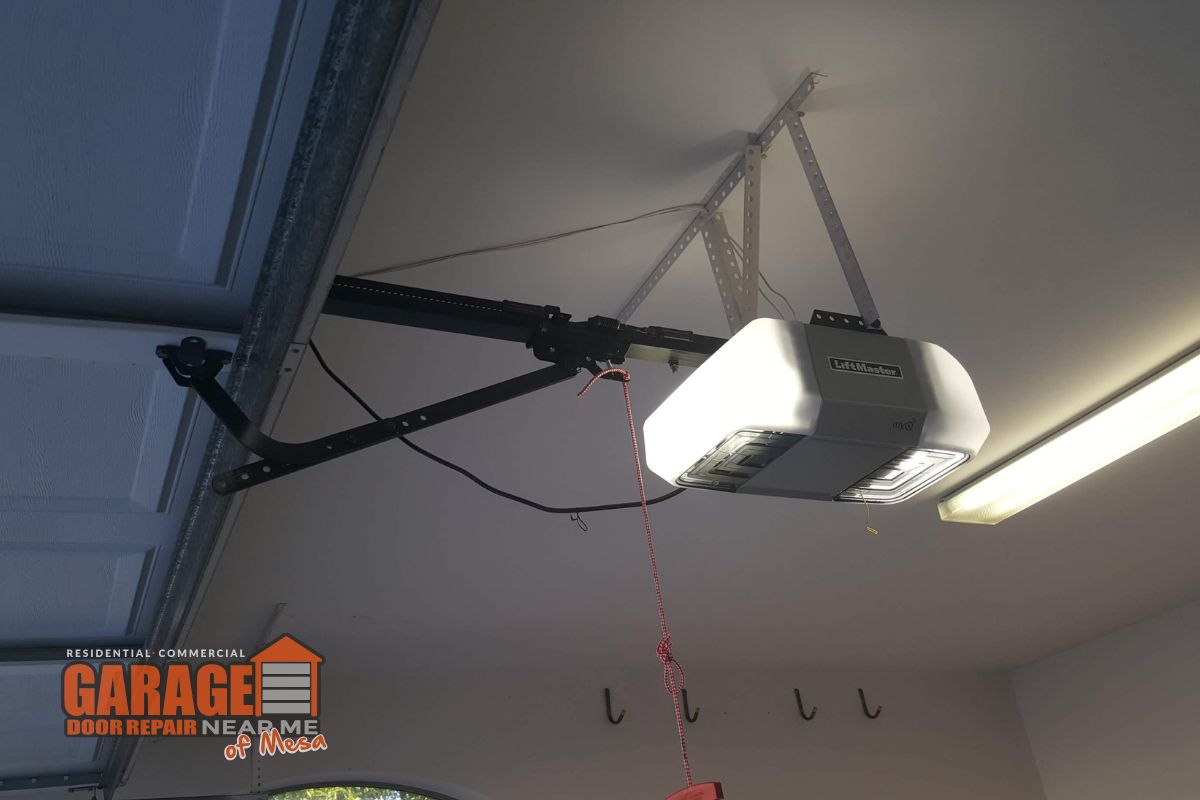
A garage door opener is a torque-and-control machine. It doesn’t “lift” the full weight of your door—it assists a counterbalanced system. When counterbalance fades or friction rises, the opener takes the hit.
The failure chain usually looks like this:
- Spring fatigue (torsion springs vs extension springs) reduces lift assistance
- Cable drum systems see higher tension and less stable tracking
- Bearing plates wear or shift, changing shaft alignment
- Track gauge misalignment and roller wear increase rolling resistance
- The opener sees higher operator motor torque load and runs hotter
- Gears, belts/chains, boards, and limit systems degrade faster
Bold takeaway: A failing opener is often the symptom of a door that’s out of balance or out of alignment—not the original problem.
If your door system is loading the opener, you may need related service such as garage door spring replacement and repair, garage door track repair and realignment, or garage door roller replacement to stop repeat failures.
Mesa-specific stressors that shorten opener life
Mesa openers live in conditions that accelerate both mechanical and electronic wear:
Arizona heat expansion
Metal expands and contracts daily. That movement can loosen fasteners, shift track spacing, and subtly change door geometry. Even slight changes increase resistance and create jerky travel—especially on doors with existing panel fatigue.
Dust infiltration
Dust migrates into rollers, hinges, and operator housings. It increases friction and contaminates lubricated surfaces, raising load and noise. It can also interfere with sensor reliability if the photo-eye lenses collect debris.
UV seal degradation and air gaps
As seals degrade, the door may rattle, flex, and vibrate more. Vibration transfers into the operator rail and mounting points and can accelerate component fatigue.
Bold takeaway: Mesa doesn’t just “wear out” openers—it raises the operating load that causes premature failure.
For long-term stability, preventive service like garage door maintenance and tune-up service helps control friction and alignment drift that silently destroys openers.
Common opener failure modes
When pros diagnose a garage door opener failing in Mesa, AZ, they usually find one (or more) of these technical causes:
1) Gear and drive wear (especially under high load)
High torque demand strips gears, deforms sprockets, or accelerates belt/chain wear. This is common when springs lose strength or when tracks/rollers bind.
- Chain vs belt drive systems: chain drives tolerate abuse but can amplify vibration; belt drives run smoother but don’t like chronic overload.
Bold takeaway: Drive type doesn’t “solve” load problems—load problems destroy any drive type.
2) Logic board or power component failure
Heat cycles and power quality issues can damage logic boards, relays, capacitors, and connectors. Symptoms often include random resets, intermittent operation, or inconsistent response to remotes/wall controls.
3) Limit system problems (calibration drift, sensor logic, travel issues)
Limit switch calibration concepts matter because the operator must stop the door at the correct travel endpoints. When limits drift, the opener may:
- stop early (door doesn’t close fully)
- overshoot and reverse
- stress the top section or rail mounting
4) Safety sensor faults (alignment, signal loss, vibration)
Safety sensor alignment failures can mimic mechanical problems. A pro verifies sensor geometry, wiring integrity, and whether door vibration is causing intermittent misreads. If sensors need service, address it through garage door safety sensor repair and alignment.
Bold takeaway: If sensors “act up,” the root cause may still be mechanical vibration from friction and misalignment.
When the opener isn’t the real problem: door mechanics that overload it
Before anyone recommends replacing the operator, a professional should rule out the door issues that commonly create “false” opener failure.
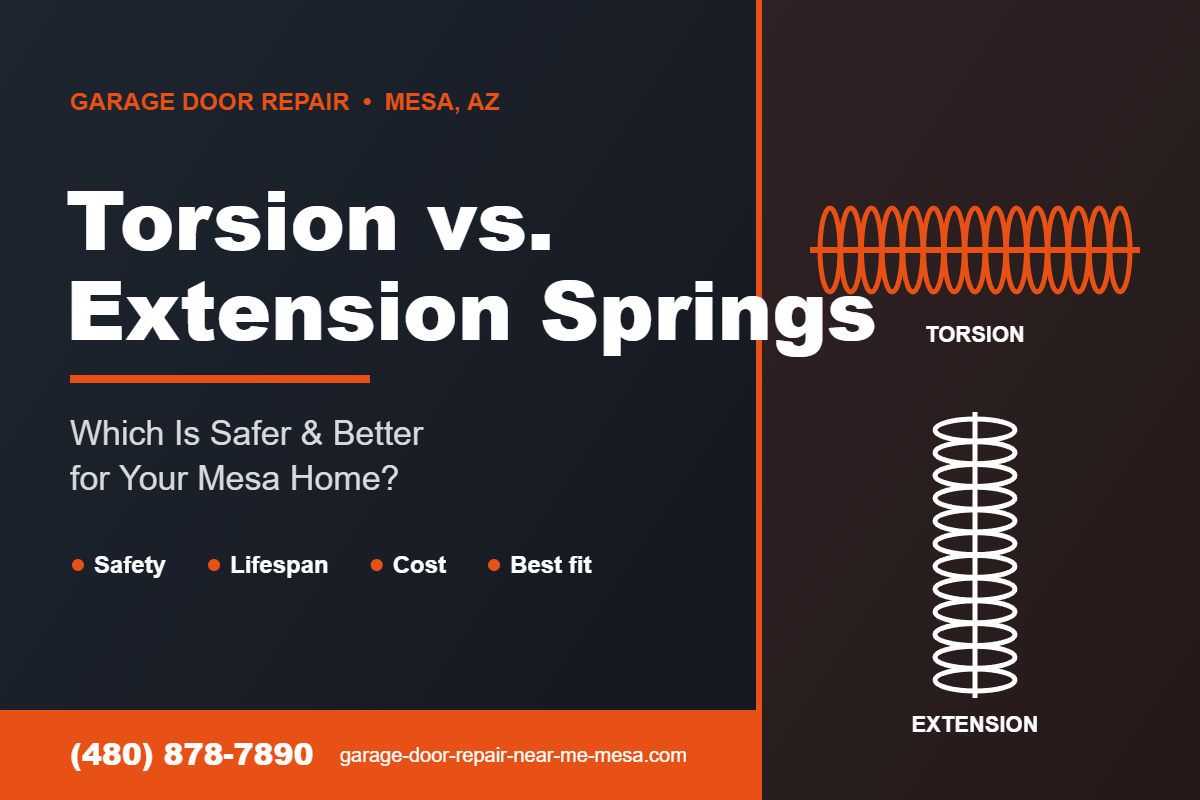
Springs and counterbalance (torsion vs extension)
Weak springs force the operator to carry weight it was never designed to carry. This is the #1 reason openers burn out early. Proper garage door spring replacement and repair restores balance and reduces torque demand.
Cable drum systems + bearing plates
Cable drift or uneven wrap on drums can rack the door (twist) during travel. Bearing plates that wear or shift can change shaft alignment and create inconsistent lift.
Track gauge misalignment + roller wear
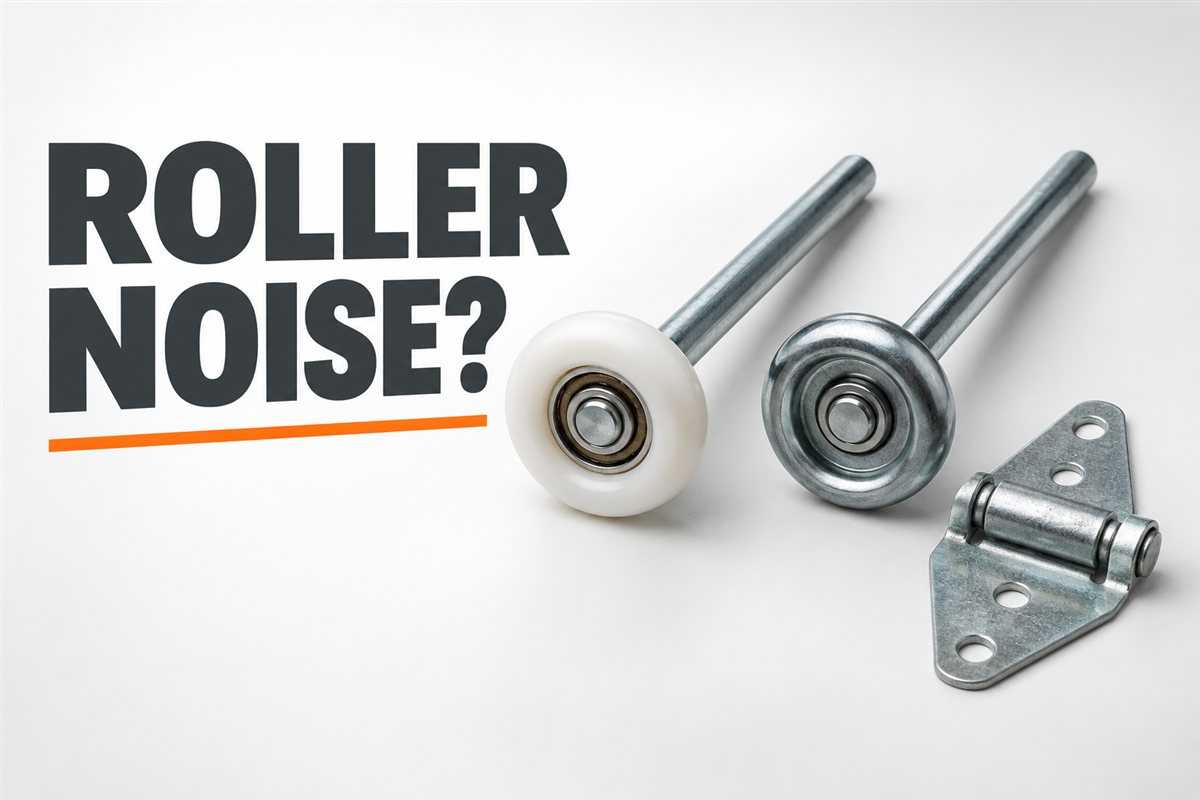
Tracks that drift out of gauge bind rollers and spike load. Roller wear (nylon vs steel) also changes rolling resistance and vibration:
- nylon rollers reduce noise but can degrade under heat/dust if low-grade
- steel rollers tolerate abrasion but may be louder and transfer vibration
If travel feels rough or noisy, garage door track repair and realignment and garage door roller replacement often protect the opener from repeat overload.
Panel structural stress and damage
A cracked or bowed section changes geometry and increases friction during travel. If the door leaf is compromised, consider garage door panel replacement and repair as part of the solution.
Cable issues
Frayed or drifting cables change lift symmetry and raise load unpredictably. Pros address this through garage door cable repair and replacement when required.
Bold takeaway: Replacing an opener without fixing the load-path problem often leads to another “mystery” failure—just with a newer operator.
Repair vs Replace: how pros decide
A good recommendation uses measurable signals: duty cycle, component condition, and repeat-failure risk.
Replace the opener when:
- the motor overheats repeatedly under normal conditions
- internal gears/drive components show advanced wear patterns
- the logic board fails intermittently or shows heat-related instability
- you see persistent limit drift that returns after proper calibration
- the operator can’t meet modern safety expectations or compatibility needs
- the unit is mismatched to door size/duty cycle (common after door upgrades)
Repair the opener when:
- the core motor and board remain stable
- failure isolates to serviceable components (drive parts, sensors, wiring, limits)
- door balance/alignment issues get corrected so the operator runs within spec
Bold takeaway: “Replace” becomes the best path when reliability risk stays high even after correcting door mechanics.
Quick comparison table
| Signal | Repair likely | Replace likely |
|---|---|---|
| Door load | Normal | Chronic overload |
| Electronics | Stable | Intermittent resets |
| Drive wear | Minor | Advanced wear |
| Limits | Holds | Keeps drifting |
| Age/use | Moderate | Heavy duty cycle |
| Safety features | Adequate | Needs upgrade |
Quick Diagnosis
Symptom → Likely Cause → What a Professional Checks
- Opener hums but door barely moves → High load or drive wear → Motor current draw, geartrain condition, door balance, track resistance
- Door reverses during close → Resistance or safety input → Track gauge, roller friction, sensor alignment, force/limits behavior
- Door stops short of fully open/closed → Limit drift or travel issue → Limit system response, rail alignment, door geometry, binding points
- Remote works intermittently → Signal or control issue → Antenna/control board health, wiring, interference patterns, power stability
- Loud grinding/clicking → Gear/sprocket wear under torque → Gear kit wear patterns, sprocket alignment, chain/belt condition
- Opener runs hot or smells “electrical” → Overload or failing electrical components → Motor temperature behavior, capacitor/board health, torque demand from the door
What a professional checks in Mesa
A proper diagnostic doesn’t start by blaming the opener. It starts by confirming the operator isn’t fighting the door.
A professional evaluation typically includes:
- Door load-path review: springs (torsion vs extension), cable drums, bearing plates, and lift symmetry
- Travel geometry: track gauge, roller wear, panel alignment, and signs of racking under load
- Operator performance: motor torque load indicators, drive wear, mounting stability, vibration transfer
- Control systems: limit switch calibration concepts, safety sensor alignment, and reversal logic consistency
- Environment factors: heat stress patterns, dust intrusion, and seal degradation affecting vibration
Bold takeaway: The best repairs reduce load first—then restore accurate control and safe stopping behavior.
If your door won’t secure the opening or the operator behaves unpredictably, treat it as urgent and use emergency garage door repair so a pro can stabilize the system safely.
Commercial sites: when replacement becomes the uptime decision
Commercial properties often push operators harder: higher cycles, heavier doors, and harsher vibration. Facilities may run:
- commercial jackshaft operators (direct shaft torque)
- rolling steel doors with rolling steel door tension assemblies
- loading docks with constant loading dock hardware stress and impacts
- high-cycle commercial usage that magnifies small alignment issues
For businesses, the decision weighs reliability and compliance—not just “does it work today.” Start with commercial door operator and opener repair and keep systems stable with commercial preventive maintenance.
Bold takeaway: In commercial settings, replacement can be cheaper than repeat downtime plus safety exposure.
Mesa timeline expectations and local service coverage
Most opener issues get resolved faster when the tech can confirm door mechanics, parts compatibility, and correct safety behavior in one structured visit. Timing depends on whether the operator failure stands alone or whether the door needs mechanical corrections first.
We serve Mesa and nearby cities—see garage door service in Mesa as the hub, plus garage door service in Phoenix, garage door service in Gilbert, and garage door service in Chandler.
For more about our approach, visit Garage Door Repair Near Me Mesa or learn about the team on About Us.
FAQs
1) What affects the cost of opener repair vs replacement in Mesa, AZ?
Cost depends on the failure domain: drive/gear wear, board/electrical issues, sensor faults, and—most importantly—whether door balance or track alignment is overloading the unit. A pro will price more accurately after confirming torque demand and travel geometry.
2) How long should a garage door opener last in Arizona heat?
Life varies by duty cycle and load. Mesa heat and dust shorten lifespan when the opener runs hotter than normal due to weak springs, binding tracks, or worn rollers. Regular tune-ups and correct balance usually extend service life significantly.
3) When is an opener problem an emergency?
Treat it as urgent if the door won’t close securely, reverses unpredictably, or strains loudly under load. If the opening can’t be secured, schedule emergency service so a professional can stabilize the system safely.
4) Do commercial doors in Mesa require special compliance considerations?
Many commercial sites require documented safety and operational checks, especially with high-cycle usage, jackshaft operators, or rolling steel systems. Professional maintenance helps reduce liability and prevents sudden downtime.
5) How quickly can a pro fix an opener issue?
Some repairs resolve quickly when the failure isolates to controls, sensors, or serviceable drive components. If the opener failure stems from door imbalance, track drift, cable issues, or panel deformation, the timeline depends on correcting those mechanical contributors first.
6) What warranty details matter most?
Ask what parts and labor are covered and whether warranty depends on correct door balance, alignment, and proper operator settings. Also ask how door condition and duty cycle affect long-term reliability after service.
7) Is it safer to replace an older opener even if it still works?
If the unit shows instability, repeated reversals, chronic limit drift, or poor reliability under normal load, replacement can reduce risk—especially when paired with a corrected door system. A professional diagnosis should confirm whether the door is forcing the operator to fail.
8) What are the biggest safety risks with opener failures and spring-loaded doors?
High-tension springs store dangerous energy, and heavy doors can move unpredictably if components fail. Pros treat spring systems, cables, and commercial assemblies as safety-critical and service them with compliant procedures.
Closing: the safe replacement decision in Mesa
When you see a garage door opener failing in Mesa, AZ, the root cause usually comes down to load and control: weak springs or friction overload the operator, then heat and wear take out gears, boards, limits, or sensors. The correct repair path starts with professional diagnostics of the door’s counterbalance and travel geometry, then confirms the opener can operate within safe torque limits.
If the operator shows advanced wear, unstable electronics, repeated calibration drift, or high risk of repeat failure—even after fixing door mechanics—replacement becomes the smarter long-term decision. We serve Mesa and surrounding areas including Mesa, Phoenix, Gilbert, Chandler, Tempe, and Scottsdale.
For a safe evaluation and clear recommendation, call. High-tension spring systems and heavy commercial doors can be dangerous when mishandled, so always use trained professionals.